
Alexander Technique

“People do not decide their futures, they decide their habits and their habits decide their futures.”
―F. M. Alexander
On the Alexander Technique…
I knew somehow that finding greater freedom in my body would help me as a young actor, and I did find that in yoga classes, but I didn’t know how to transfer that freedom to my daily life and my acting. It wasn’t until years later, when I found great joy in teaching theatre in my graduate theatre program, that I finally took an Alexander Technique lesson. But I took it for back pain due to scoliosis. As I grew older, I struggled with back pain and often debilitating muscle spasms because of severe scoliosis in my lumbar spine. As I continued to take Alexander Technique lessons though, I discovered that this work with the body begins with blocks in our thinking and how they manifest in our bodies. Taking these early lessons was time of great personal growth for me, as well as a discovery of how I wanted to teach performers. Alexander Technique involves lessons directly applied to activity, and so this provided the bridge I was looking for between freedom in movement class to daily life and acting class. Extended study of the Alexander Technique has allowed me to live with and manage my curvature pain-free and it has become the foundation of my acting and teaching. I went on to train in a three year, 1600-hour training course accredited through the American Society for the Alexander Technique (AmSAT, ATTC-Charlottesville, VA). I now teach Alexander Technique and other movement forms as Associate Professor in the Department of Theatre and Dance at the University of Alabama.
What is the Alexander Technique?
“The Alexander Technique is an educational method used worldwide for well over 100 years. By teaching how to change faulty postural habits, it enables improved mobility, posture, performance and alertness along with relief of chronic stiffness, tension and stress.
People study the Technique for a variety of reasons. The most common is to relieve pain through learning better coordination of the musculoskeletal system. Another reason people take lessons in the Alexander Technique is to enhance performance. Athletes, singers, dancers, and musicians use the Technique to improve breathing, vocal production, and speed and accuracy of movement. The most far-reaching reason people study the Technique is to achieve greater conscious control of their reactions.
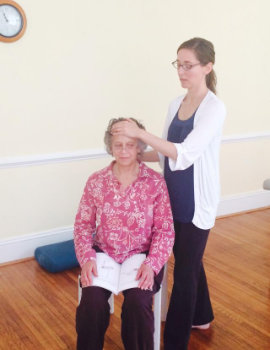
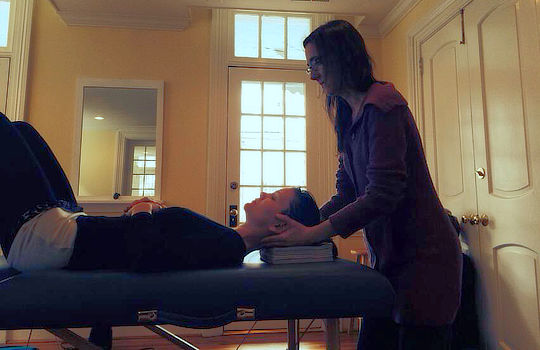
Most of us have many habitual patterns of tension, learned both consciously and unconsciously. These patterns can be unlearned, enabling the possibility of new choices in posture, movement and reaction. During lessons you’ll develop awareness of habits that interfere with your natural coordination. You’ll learn how to undo these patterns and develop the ability to consciously redirect your whole self into an optimal state of being and functioning. Through direct experience you’ll learn how to go about your daily activities with increasingly greater ease and less effort.”
-American Society for the Alexander Technique
Amsatonline.org
Acting and The Alexander Technique
Innovations and Results
Kelley Schoger, MFA, M.AmSAT
Kelley earned her professional certification in the Alexander Technique in 2014 through the American Society for the Alexander Technique (AmSAT, amsatonline.org), the largest professional organization of Alexander Technique teachers in the United States. Certified teachers complete 1600 hours of coursework over three years, and she trained at Alexander Technique Training Center in Charlottesville, VA.
She is also a certified instructor of Jessica Wolf’s (Yale School of Drama) Art of Breathing methodology, which enhances a students’ three-dimensional vitality and use through their breathing. She completed this 60-hour certification in New York City in June 2023.
Where would any of us be without Kelley Schoger? Her adaptability, fluidity, and tenacity for approaching the student in the present moment is nothing less than inspiring; especially when she achieved the same level of connection in a virtual manner! This class, as with all others she teaches, was invaluable.
Kelley is a commodity at UA – she is an expert in her content, but also in her pedagogical knowledge. She understands diversity in learning so the experience of her class involves imaginative exercises, practical constructive rest, movement and respiratory re-education through breathing procedures, writing journals, and formal essays. The required reading was also affordable and truly supported the learning outcomes of the class – The Art of Breathing by Jessica Wolf and Dr. Breathing were great follow-ups to the first year TH 540 learning the basics of AT with the Gelb text. Kelley is a mentor, facilitator, guide, and has improved my graduate training immensely. While I am in the directing program, not the acting cohort, Kelley has still made me feel included and welcomed. She enters class every day with a smile on her face and a very clear, creative lesson plan and calming words of affirmation like “arrive exacting where you are on the mat without judging yourself,” “imagine your neck as a hammock,” “become aware of all of the air and space beside and behind you in your 3 dimensionality.” While Kelley has high, professional expectations, she provides constructive feedback with grace. The learning activities she designed around Jessica Wolf’s The Art of Breathing were illuminating and fascinating and life changing. How lucky is The Department of Theatre and Dance to have a professor with the experience of training under the renowned Jessica Wolf? I do not believe there is another Art of Breathing instructor in the state of Alabama, and the procedures have really improved my voice and respiratory health. I am breathing easier and more effectively because of this semester. Kelley has provided the kind of knowledge that I came to Grad School for… and more than that, the principles of her classes are helping ME become my own teacher as a self-sufficient artist with many tools.
There aren’t enough positive things to say about Kelley Schoger, but I was constantly in awe of how diligent she was in ensuring each student was accommodating well to the new learning experience. She was always accessible and found new ways to bring our “normal” learning experience to an online platform. She handled this transition with ease and made sure we got the most out of the remaining days of the semester.